

Candle Batch
& Fragrance Oil
Calculator.
Calculate your wax. Calculate your fragrance. Scale your pour. A free candle fragrance oil and batch calculator for wax-to-fragrance ratios, fragrance load, multiple candles, grams, ounces and optional pour overage.
Build the batch.
Choose how you want to start, enter your fragrance load, and the calculator handles the conversion. Results update instantly.
No mystery behind the numbers.
“Fragrance load” is not always expressed the same way. The calculator labels both conventions so you know exactly what the percentage means.
For planned candle fills, the tool works backward from your target finished batch. That keeps the final pour aligned with the weight you actually want in the vessels.
Fragrance = Wax × Load%If you start with 500 g of wax at 8%, fragrance oil is 40 g and the finished batch is 540 g.
Wax = Finished Batch ÷ (1 + Load%)When load is based on wax weight, the calculator reverses the formula so wax + fragrance lands on your target finished batch.
Fragrance = Finished Batch × Load%If your chosen convention defines fragrance as a percentage of the entire finished mixture, the wax is the remainder.
How much fragrance oil per pound of wax?
When fragrance load is calculated on a wax-weight basis, the math is straightforward: multiply the wax weight by the fragrance percentage. One pound of wax is 16 ounces, so a 6.25% load equals exactly 1 ounce of fragrance oil per pound of wax.
This is a math reference, not a recommended fragrance load. Your wax manufacturer's guidance and your own burn testing determine whether a percentage is appropriate for the materials you use.
Need a different amount? Use the calculator above to answer questions like how much fragrance oil per candle, how much wax you need for multiple candles, or how to scale a wax-to-fragrance ratio from one test candle to a full batch.
| Fragrance load | Per 1 lb wax | Per 1 kg wax |
|---|---|---|
| 6% | 0.96 oz | 60 g |
| 6.25% | 1.00 oz | 62.5 g |
| 8% | 1.28 oz | 80 g |
| 10% | 1.60 oz | 100 g |

The calculator measures. Your materials decide.
Fragrance capacity varies by wax, fragrance system and manufacturer. More fragrance does not automatically produce a stronger or better-burning candle.
From the calculator to the candle table.
The math gets the batch started. The craft comes from testing, recording what works and developing combinations worth making again.
Explore the complete Wayne Bodie Books candle-making collection for signature fragrance blends, boutique recipe inspiration and practical maker workflow.
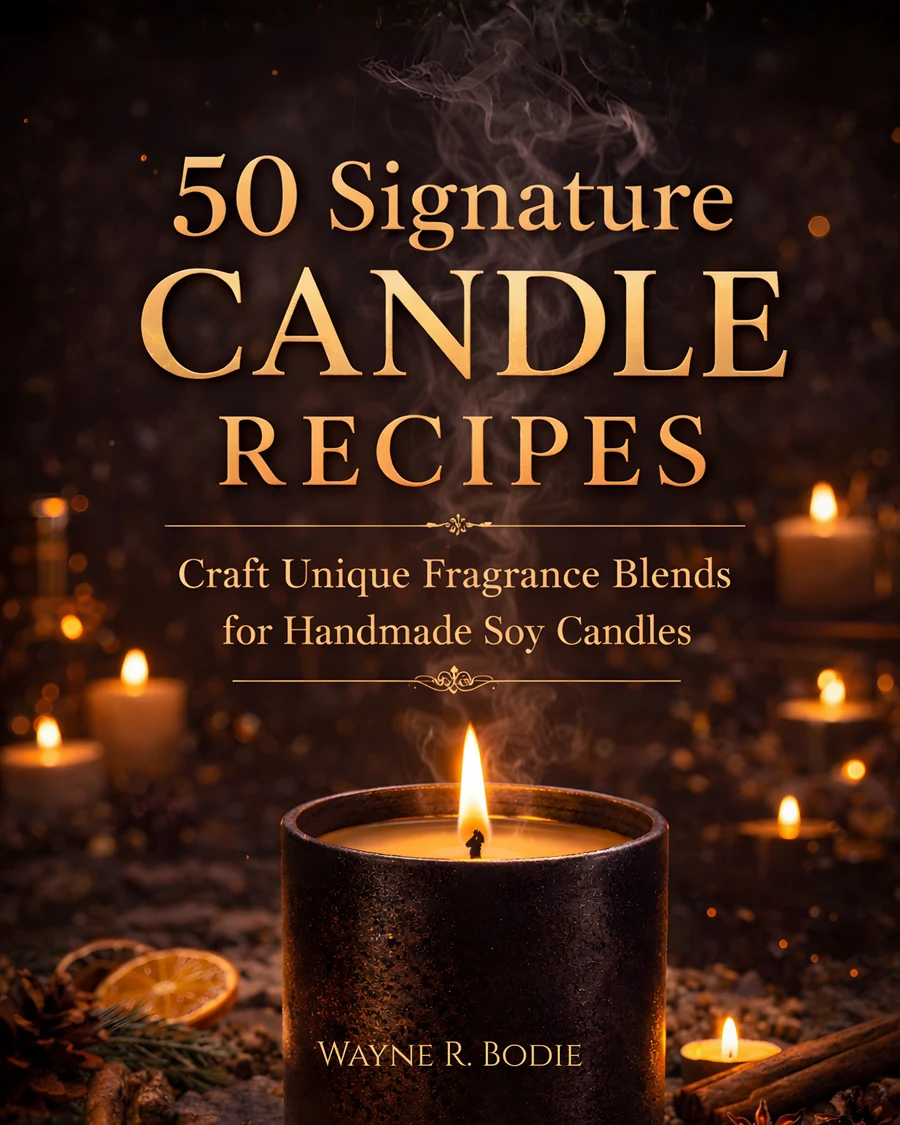
Fifty signature fragrance recipes for handmade soy candles, with scent profiles, essential oil blends, step-by-step instructions, difficulty levels and cure times.
Explore the book →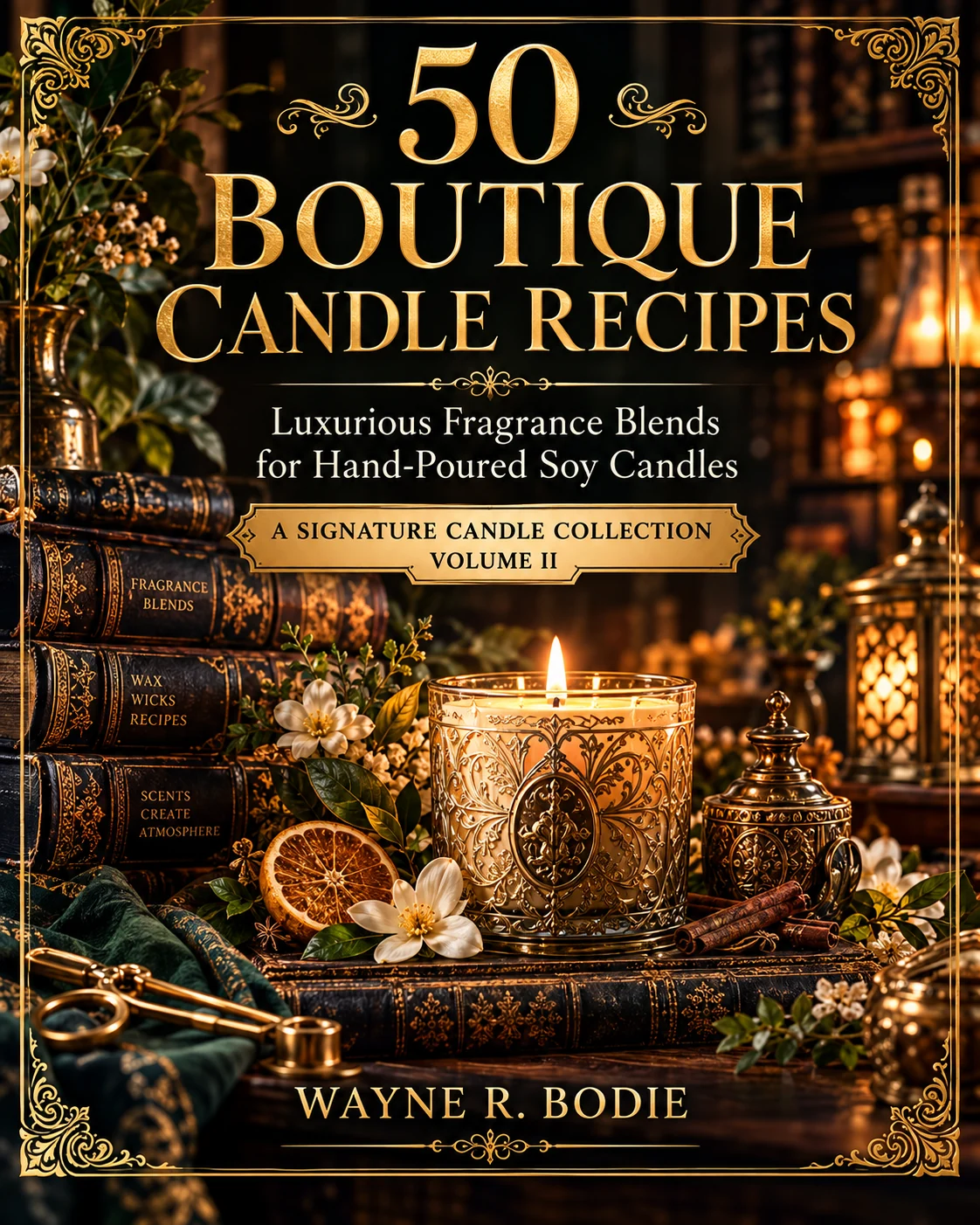
Premium fragrance concepts and boutique-inspired combinations built for makers who want the next pour to feel distinctive.
Explore the book →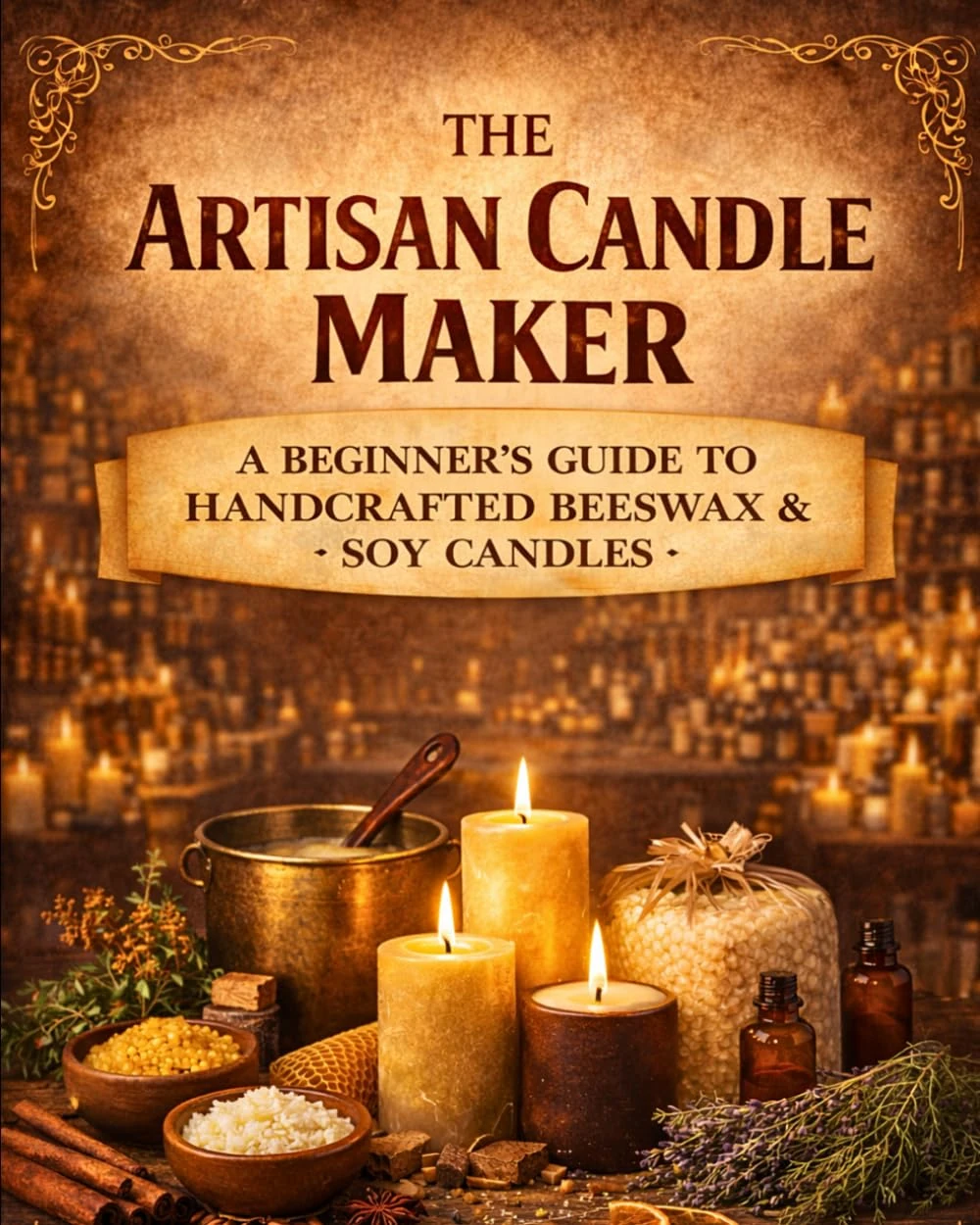
A practical guide to materials, process, testing and the records that turn experiments into repeatable craft.
Explore the book →Candle calculator FAQ.
How is candle fragrance load calculated?
The common wax-weight convention calculates fragrance oil as wax weight multiplied by fragrance-load percentage. Some makers instead define fragrance as a percentage of the finished wax-and-fragrance batch. This calculator supports both and labels the math clearly.
What fragrance load should I use?
Use the guidance supplied by the manufacturer of your exact wax and fragrance system. The optional maximum field lets you compare your selected load with the limit you enter, but the calculator does not choose that limit for you.
Should I calculate in grams or ounces?
Either works because the tool converts both directions. For actual candle making, weighing ingredients on a suitable scale is more reliable than measuring fragrance by volume.